
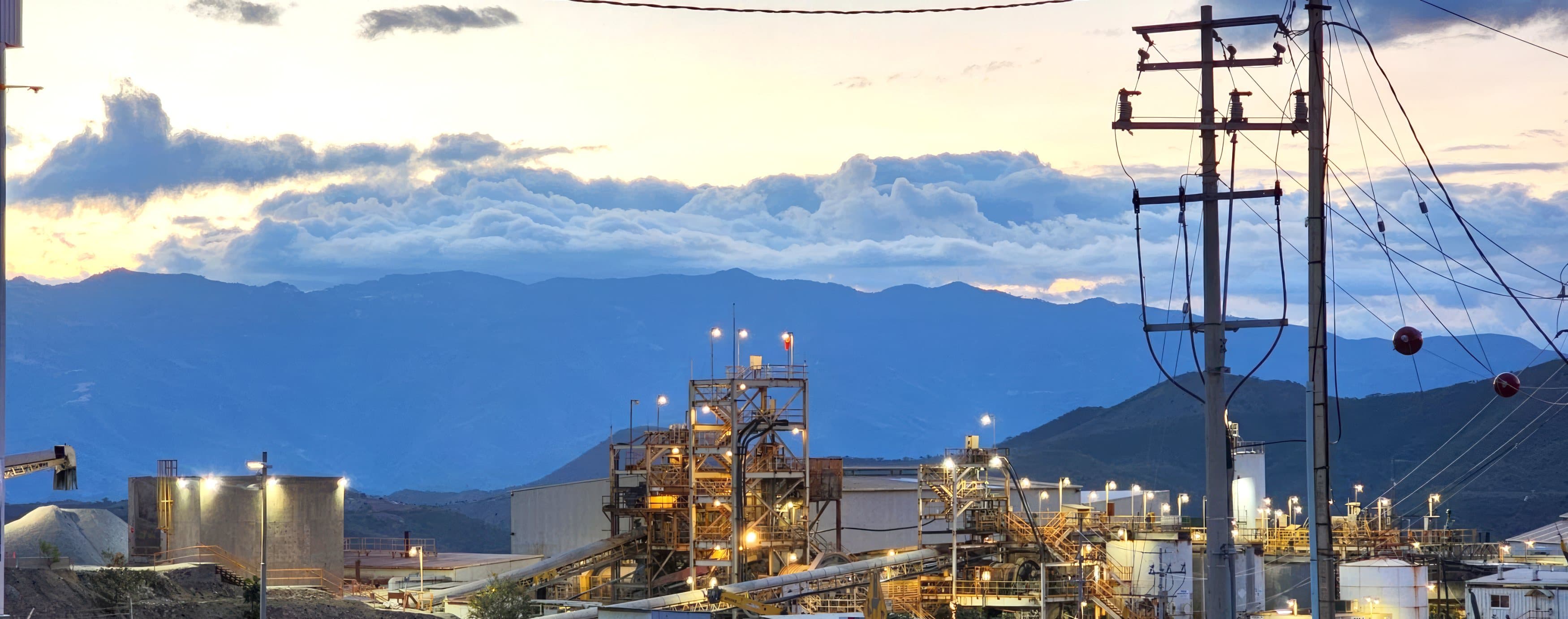
Don David Gold Mine
A 100%-owned, producing underground gold-silver mine, the Arista complex, in the mining-friendly state of Oaxaca, Mexico, with material silver and base-metal by-products.
Precious & base metals from Oaxaca
Don David is a 100%-owned, producing underground mine on a 55,000-hectare land package in Oaxaca. The Arista complex hosts a structurally-controlled, intermediate-sulfidation epithermal vein system that yields gold, silver, copper, lead and zinc, mined by a combination of cut-and-fill and long-hole methods and trucked roughly two kilometres to the Aguila mill. An estimated 37,000–52,000 ounces of gold-equivalent are expected in 2026, supported by a deep regional exploration pipeline.
A polymetallic M&I resource
Measured & Indicated mineral resources of 1.49 million tonnes grading 3.88 g/t gold-equivalent, with meaningful silver and base-metal credits.
Global M&I 1,490 Kt. Contained-metal figures shown on a Measured & Indicated basis. Mineral resource estimates prepared under S-K 1300 (effective December 31, 2024); mineral resources are not mineral reserves and do not have demonstrated economic viability.
The Arista mine complex
A network of high-grade epithermal veins across the Arista, Three Sisters and Switchback systems, mined underground and processed at the nearby Aguila mill.
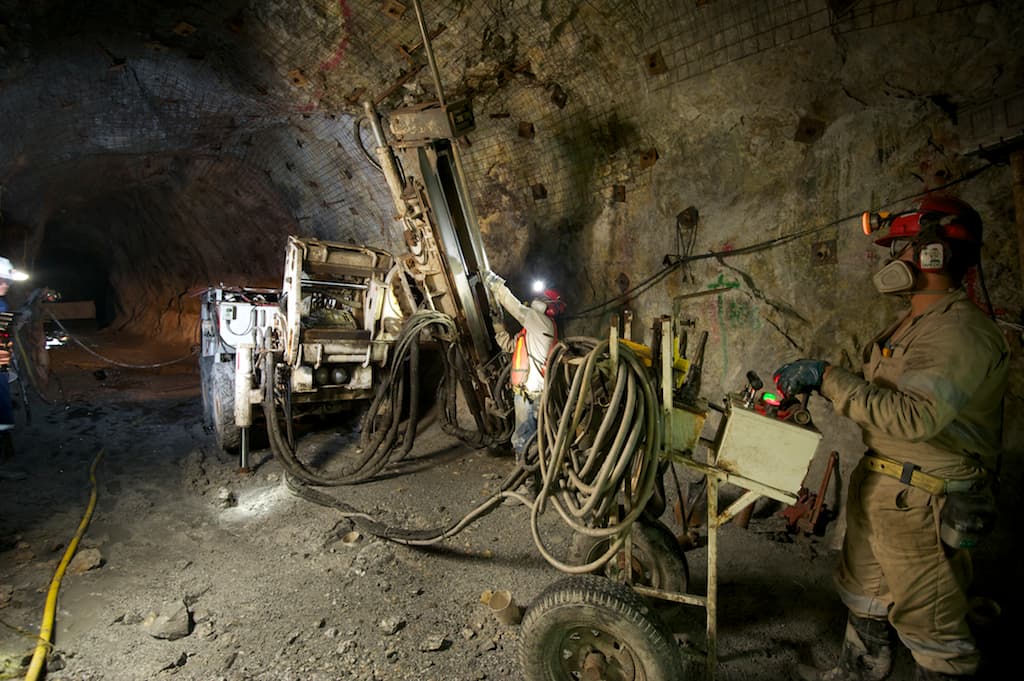
Mining is focused on the Viridiana, Chuy, Splay 5 and Splay 31 veins of the Arista system; the Sandy's veins of the Three Sisters system; and the Susana vein of the Switchback system, with an excess of a 5-year mine life and infill expansion probable. On-site infrastructure includes a flotation plant (1,800 tpd) and agitated-leach circuit (300 tpd), grid power, paste and dry-stack facilities, producing three concentrates: zinc, lead-silver, and copper-gold.
A district-scale pipeline
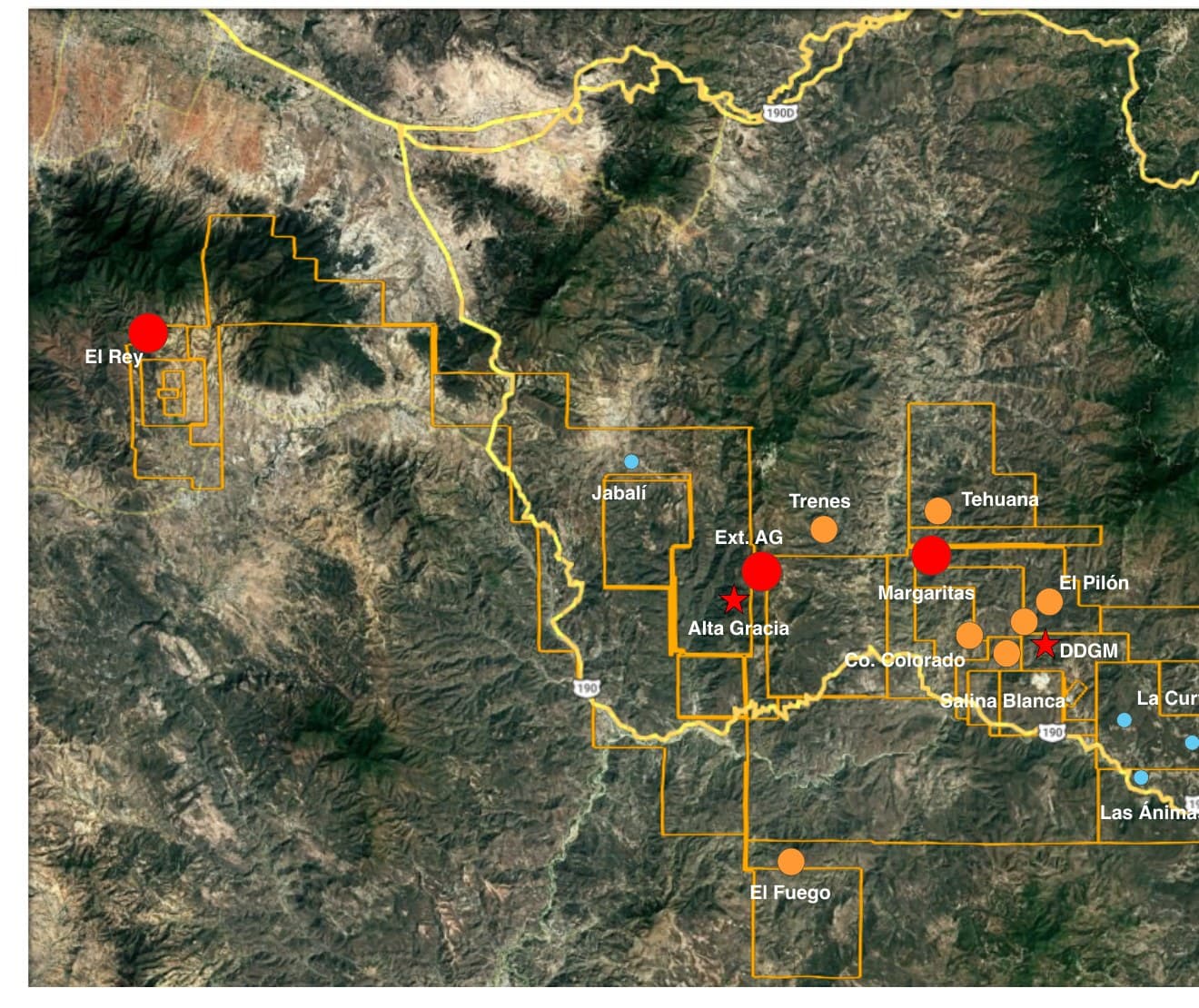
Exploration reaches beyond the producing veins into a district-scale pipeline that begins underground at the Arista complex, where the San Juan vein is being developed and stepped out toward the Victoria system, then extends to a series of ranked greenfield targets along the San José structural corridor.
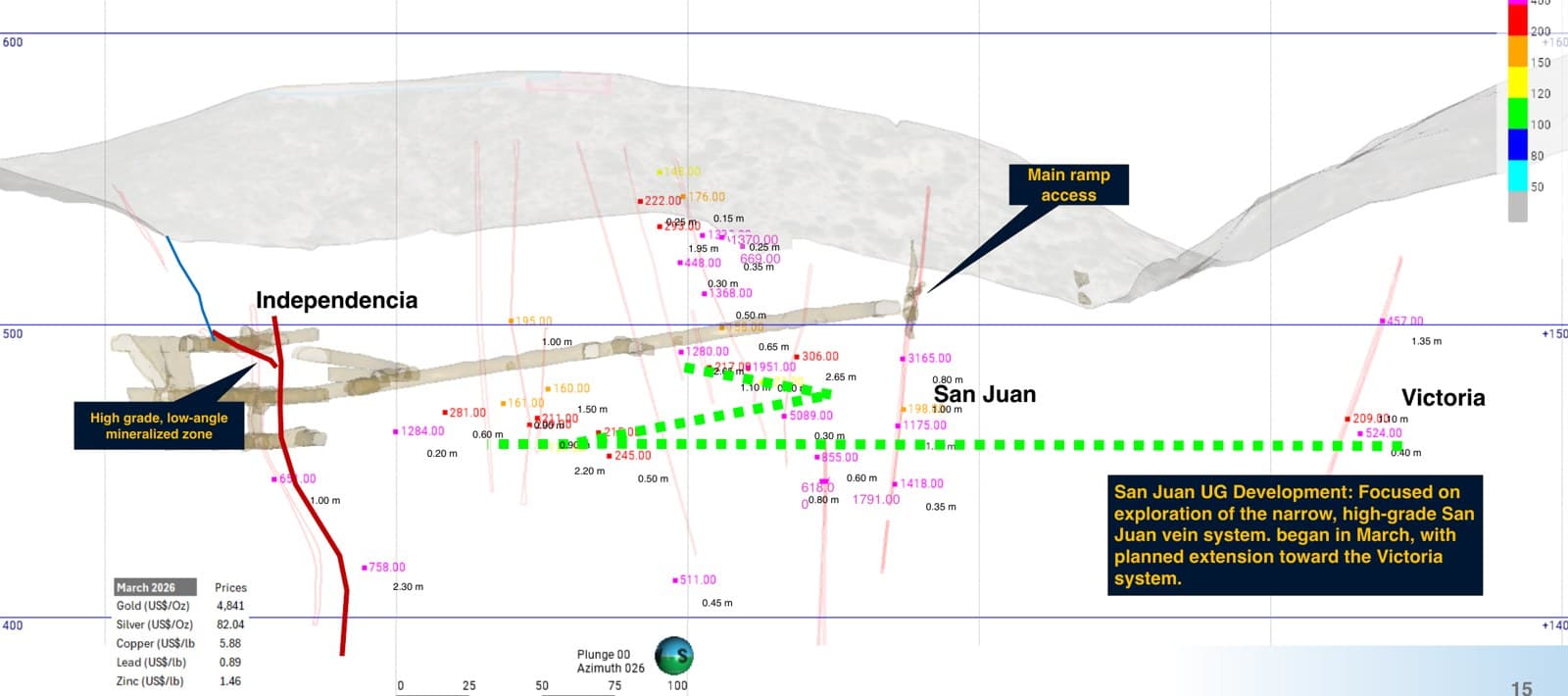
San Juan underground development
A dedicated underground program is advancing the narrow, high-grade San Juan vein system, reached off the main ramp access and anchored by a high-grade, low-angle mineralized zone at Independencia. Development began in early 2026, with a planned step-out extension eastward toward the Victoria system, opening a new front for resource growth inside the existing complex.
Alta Gracia
High-priority greenfield target
Alta Gracia ranks among the property's highest-priority greenfield prospects, set within the same San José structural corridor that hosts the producing Arista complex. Targets across the pipeline are ranked on a consistent set of factors, prioritizing those with the strongest potential to advance from early exploration toward a productive deposit.
Margaritas
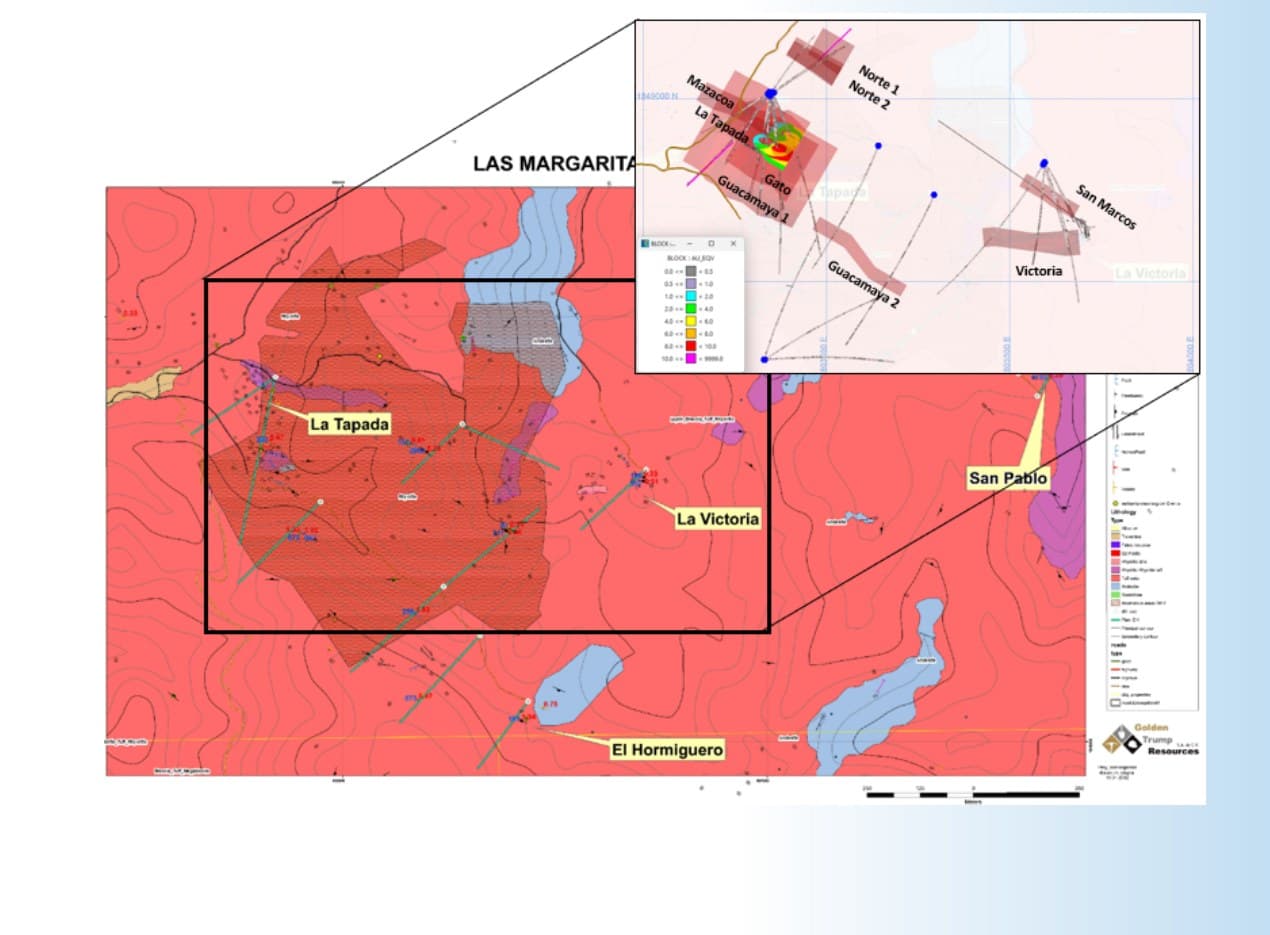
A broad target area 5–12 kilometres northwest of the Arista mine, centrally located within the San José structural corridor. A 2012–2016 program completed 21,299 metres of core drilling across 52 holes, confirming significant gold-silver mineralization.
Headline results reached up to 27.9 g/t Au and 2,600 g/t Ag over 2.85 m, with intercepts including 0.3 m @ 7.1 g/t Au & 4,010 g/t Ag (hole 315002) and 2.2 m @ 1.2 g/t Au & 599 g/t Ag (hole 315003). A 2020 estimate outlined 59,200 tonnes grading 0.53 g/t Au and 295 g/t Ag across Measured, Indicated and Inferred categories.
El Rey
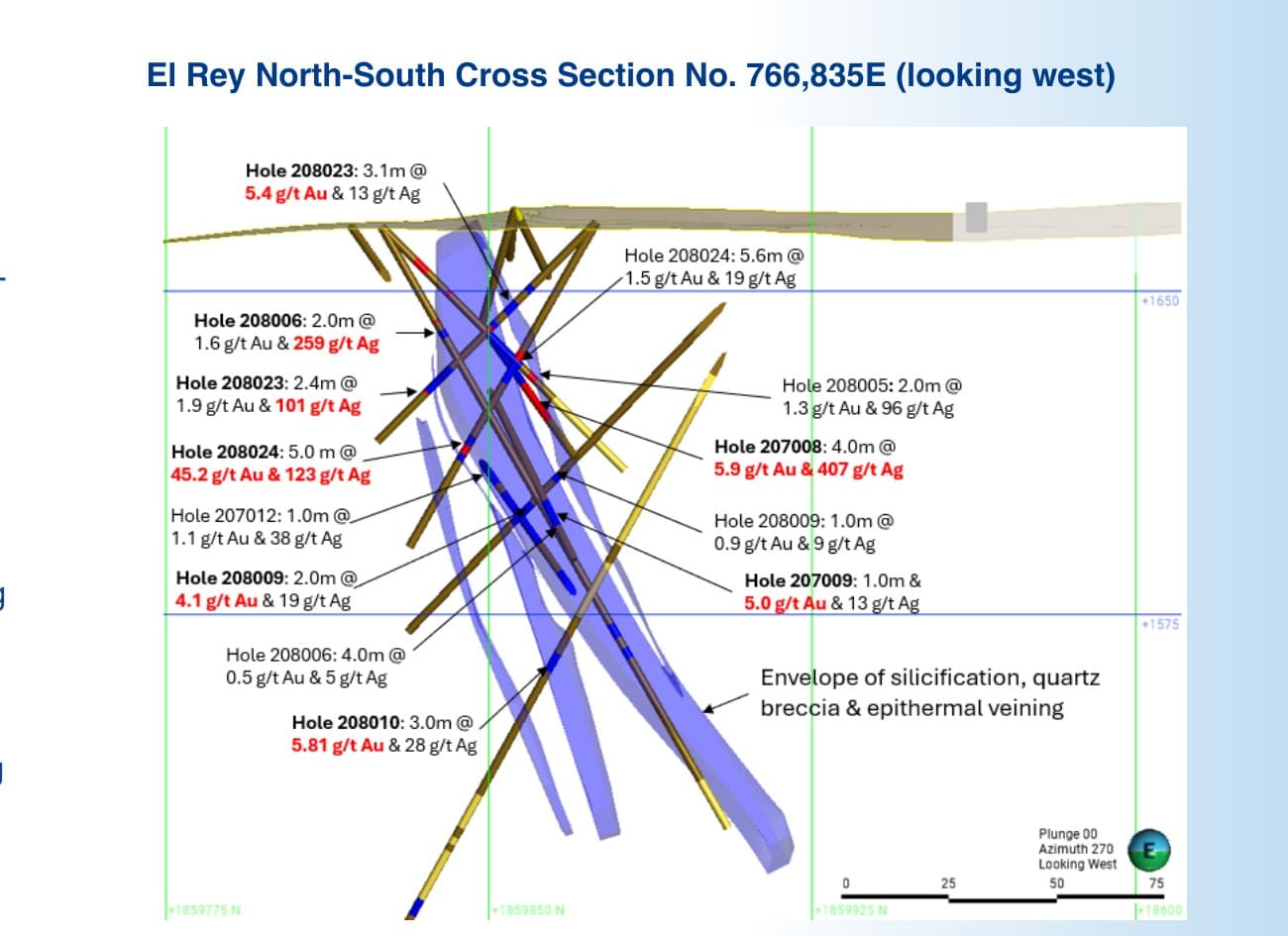
Situated 44 kilometres northwest of the Arista mine within the San José structural corridor. A Phase 1 campaign in 2007–2008 completed 5,273 metres of core drilling across 48 holes, testing a 235-metre strike length of the vein system. A follow-up program has been designed and is pending execution.
Phase 1 returned individual samples up to 132.5 g/t Au and 1,585 g/t Ag, with composite highlights of 5.0 m @ 45.2 g/t Au & 123 g/t Ag (hole 208024), 9.0 m @ 19.4 g/t Au & 75 g/t Ag (hole 207002) and 7.8 m @ 20.3 g/t Au & 78 g/t Ag (hole 208018).
A cornerstone producing asset
Explore the rest of the portfolio and the full investment case.